America just offered Russia billions to limit its own war
2 hours ago · 11 October 2026Share
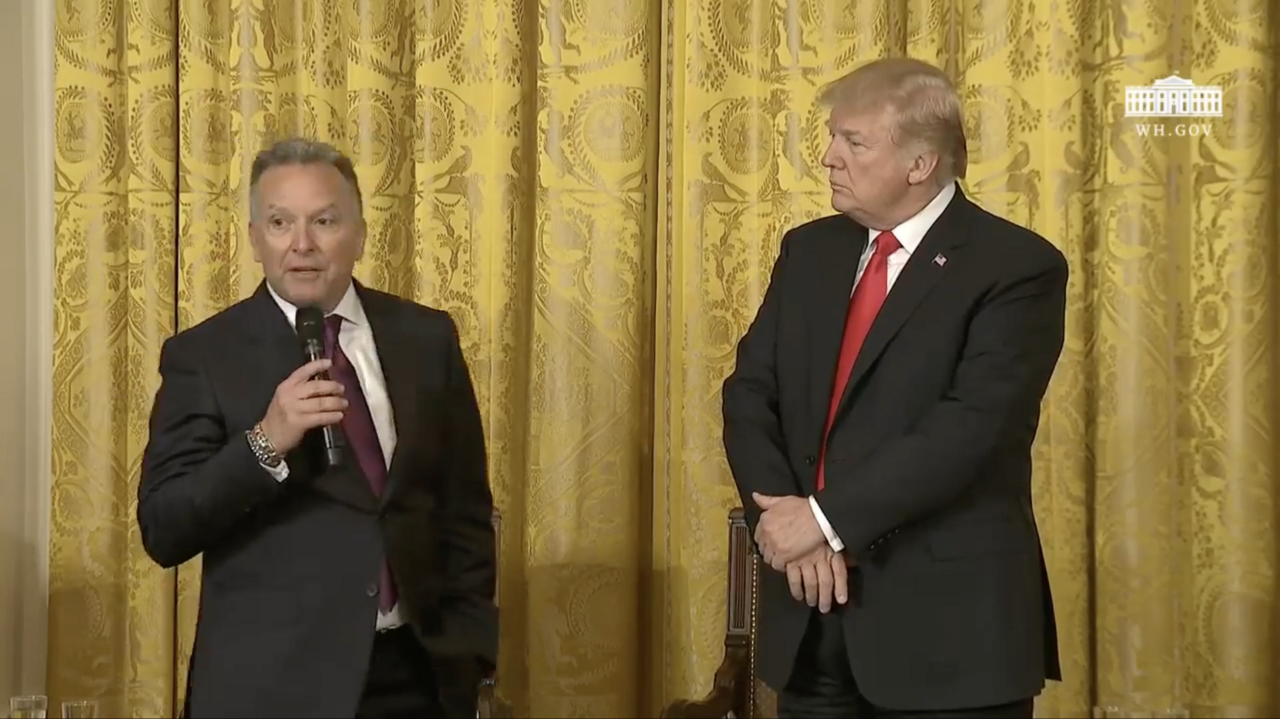
Steve Witkoff speaks alongside Donald Trump on stage during a White House Opioids Summit held in the East Room of the White House on March 1, 2018. File photo.Unknown author Unknown author · Public domain
America's own negotiators offered Russia three economic rewards to get a limited ceasefire in Ukraine.
And Ukrainian officials were reportedly surprised by how big the offer was.
The New York Times reported this about a day ago. The talks themselves happened last month, in September.
Steve Witkoff and Jared Kushner are the two men Donald Trump put in charge of ending this war. So this wasn't some side channel. This was the top of the table.
So what did they offer? Three things.
One, unfreeze billions of dollars in Russian state money that the West has held since the invasion. Two, let part of Russia's state oil company, Lukoil, be sold off to international investors. Three, let Belarus start exporting potash fertiliser again.
In return, Russia would agree to stop hitting energy infrastructure. Maybe pause military activity in the Black Sea too.
Think about that for a second. This isn't pressure on Russia. This is the opposite. This is America offering to lift sanctions on Russia, to get Russia to agree to stop hitting one type of target.
One version of the plan would unfreeze up to a hundred billion dollars. Other reports just say "billions", no number attached.
Ukraine didn't say no. But it didn't just say yes either.
It asked for one of two things back. Either match the unfrozen Russian money, dollar for dollar, for Ukraine. Or guarantee more American weapons if Russia breaks the ceasefire.
So Ukraine is trying to turn Russia's win into a win for itself too.
Now, the Lukoil part has its own backstory. Vladimir Putin raised it himself, with Witkoff and Kushner, at the Kremlin, five weeks ago.
The deal covers Lukoil's oil fields, refineries and petrol stations around the world. Fields in Cameroon. Refineries in Europe. Petrol stations in New Jersey. Lukoil itself values the whole package at around twenty billion dollars.
The rest of this story is for members.
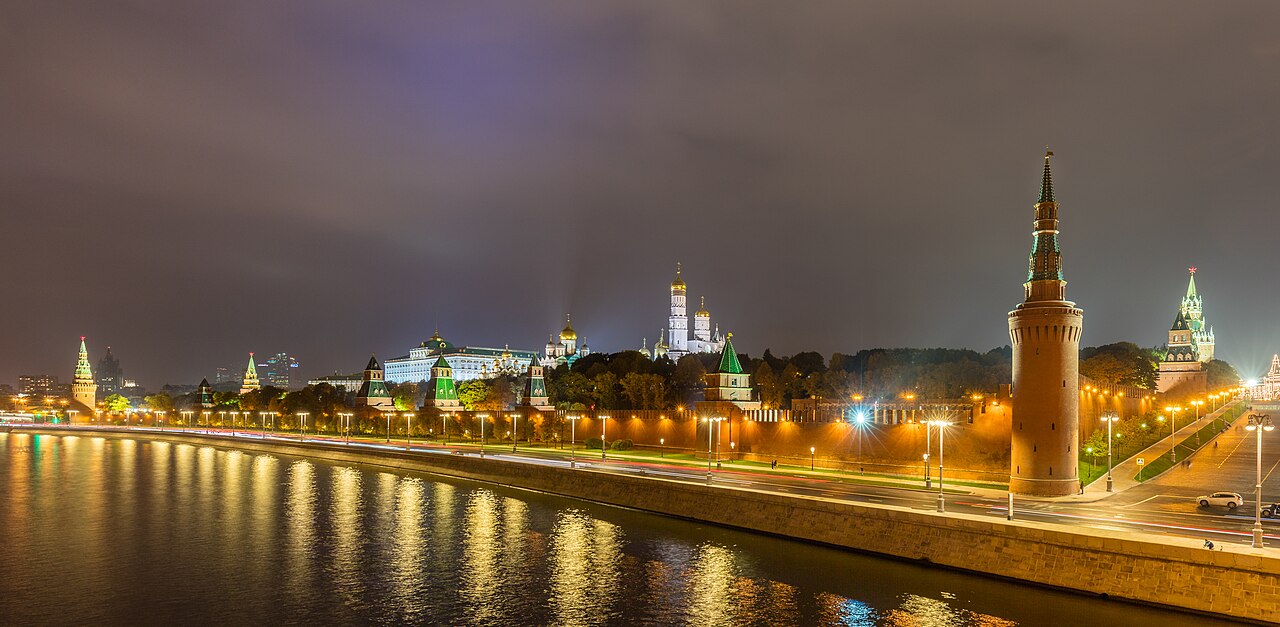
Night view of the Moscow Kremlin, a fortified complex in the center of Moscow that serves as the official residence of the President of the Russian Federation. File photo. Diego Delso · CC BY-SA 4.0
And here's who's lined up to buy it. Todd Boehly, a Trump donor. A Qatar-based group run by Moutaz and Ramez Al-Khayyat. An Abu Dhabi fund controlled by Sheikh Tahnoon bin Zayed Al Nahyan. And the US government's own development finance arm.
A senior American official told the New York Times that Witkoff and Kushner are helping negotiate the money side of that deal, to get what the official called a substantial upfront payment and profits for the United States.
So read that back. The same two men offering Russia a way out of sanctions are also helping negotiate the deal that hands a chunk of Russia's state oil company to investors with ties to them.
A spokeswoman for Witkoff says he has no conflict of interest and no financial stake in any of it.
About three days ago, Witkoff and Kushner were due to meet Ukrainian negotiators and European officials in Miami. The plan was to present new ideas, including that partial ceasefire.
A day later, Trump announced Russia would start supplying diesel fuel to America and the rest of the world. More than 300,000 tonnes straight away. Then 500,000 tonnes in November. Then a million tonnes after that. The US Treasury issued a licence easing sanctions to allow it, running until April next year.
Volodymyr Zelensky says he believes Ukraine's own negotiating team is being used as a smokescreen, and that this is not how partners should treat each other. He also said the diesel deal was a weak decision by strong partners.
According to the New York Times, Moscow has offered nothing back for any of the three incentives. The ceasefire talks have hit a wall. A Kremlin aide, Yuri Ushakov, says Russian authorities will still think about when to pick talks back up.
Daniel Fried, a former US Ambassador to Poland, told the paper that Russia isn't interested in diplomacy right now. He says it's waiting for a better offer from the West. And chasing Russia, he says, only teaches it to hold out for more.
Putin has already thrown out part of the plan himself. Ten days ago he called a mutual halt on energy strikes ridiculous, pointing to the restrictions already on Russian oil exports. And three weeks ago, Sergei Lavrov, Russia's Foreign Minister, said Russia is ready to negotiate a long-term deal, but will not pause its military campaign while talks go on.
So here's what's missing from the whole plan. Ukraine's name isn't on any of the incentives.
Russia gets its money unfrozen. Russia gets part of its oil company sold on. Belarus, Russia's ally, gets its fertiliser back on the market.
Ukraine gets asked what it wants in return. And it's still waiting for an answer.
Nothing here was paid for by an advertiser. Members are the entire business model. Bronze is where it starts, and it opens the last seven days in full.