France just admitted its police lost control and Macron is keeping his minister anyway
2 hours ago · 19 October 2026Share
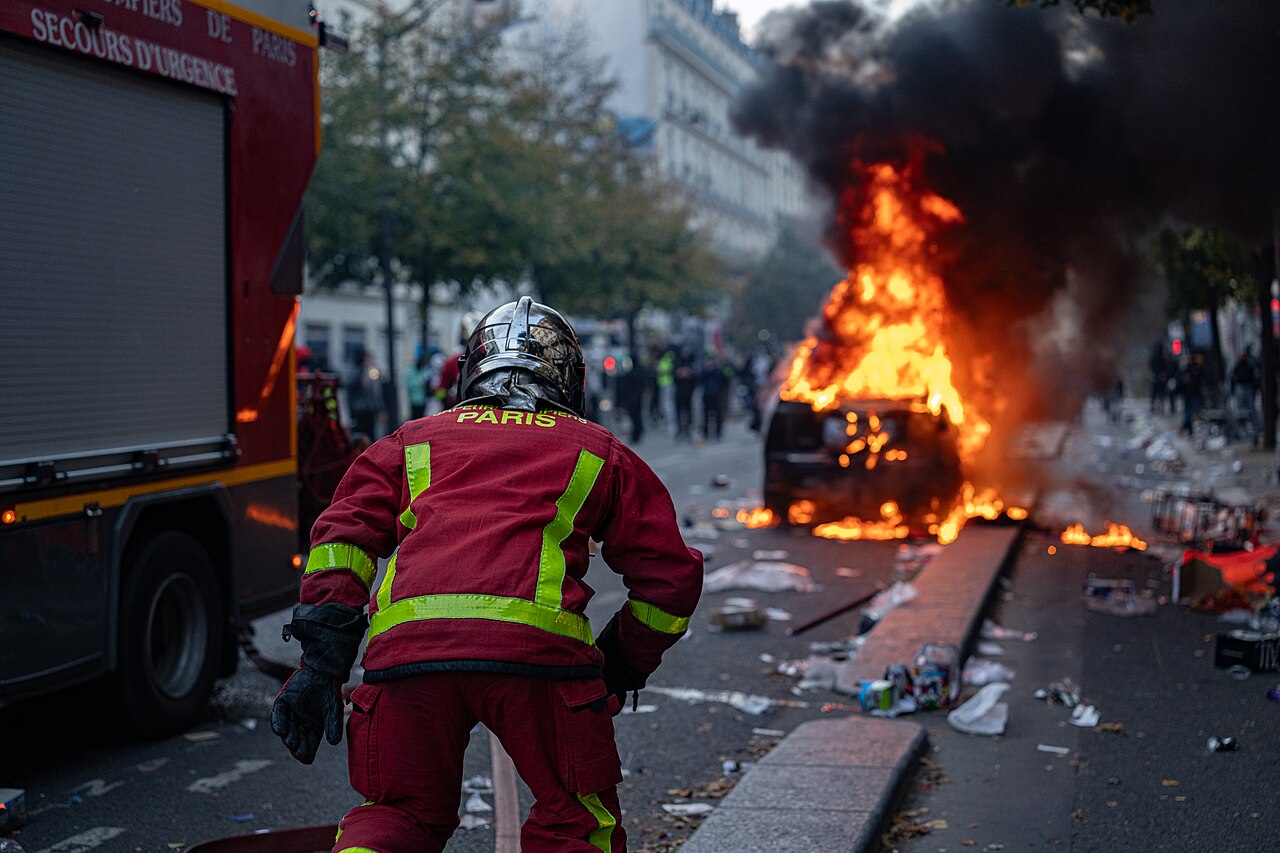
Firefighters approached a burning car on Boulevard Voltaire during the Paris riots on 17 October 2026. Jorge Jaramillo · CC BY-SA 4.0
France just had its worst unrest in years. And now its own government can't agree on what happened.
Two days ago, nationwide protests turned into riots. Town halls got torched. Shops got looted. Buildings got covered in graffiti.
One of them was 143 years old. The town hall in Limoges. Burned down.
Guillaume Guerin, the mayor of Limoges, says it was no accident. He says there was a clear, premeditated intention to burn the building down. He's now threatening to resign unless he gets money to rebuild it.
So how many people got arrested? Depends who you ask.
The National says more than 2,000. Al Jazeera and France 24 say nearly 2,400. Gérald Darmanin, France's Justice Minister, gave a weekend number of 2,331.
He says 70 per cent of those held were adults. Most already known to police. More than 80 per cent now face prosecution.
Police injuries don't match up either. The National says over 600 officers hurt. Al Jazeera says almost 1,000 police and gendarmes injured.
One protester died of a cardiac arrest in Paris. That's from The National. No second source has confirmed it yet.
And it got worse than fires and arrests.
A 17-year-old girl lost an eye during protests in Mulhouse. Prosecutors have opened an investigation. A young protester lost a hand in Saint-Etienne. Al Jazeera separately reports a demonstrator's hand was blown off by a police crowd-control grenade.
About 60,000 police and gendarmes were sent out nationwide on the day of the riots. That's according to Laurent Nunez, France's Interior Minister.
Authorities say around 550,000 people turned out. Organisers say it was 800,000.
So where did all this come from?
Not from nowhere. It started last month as student protests over overcrowded classrooms and teacher shortages in working-class suburbs. Then it grew. Into anger over inequality, the cost of living, and cuts to public services.
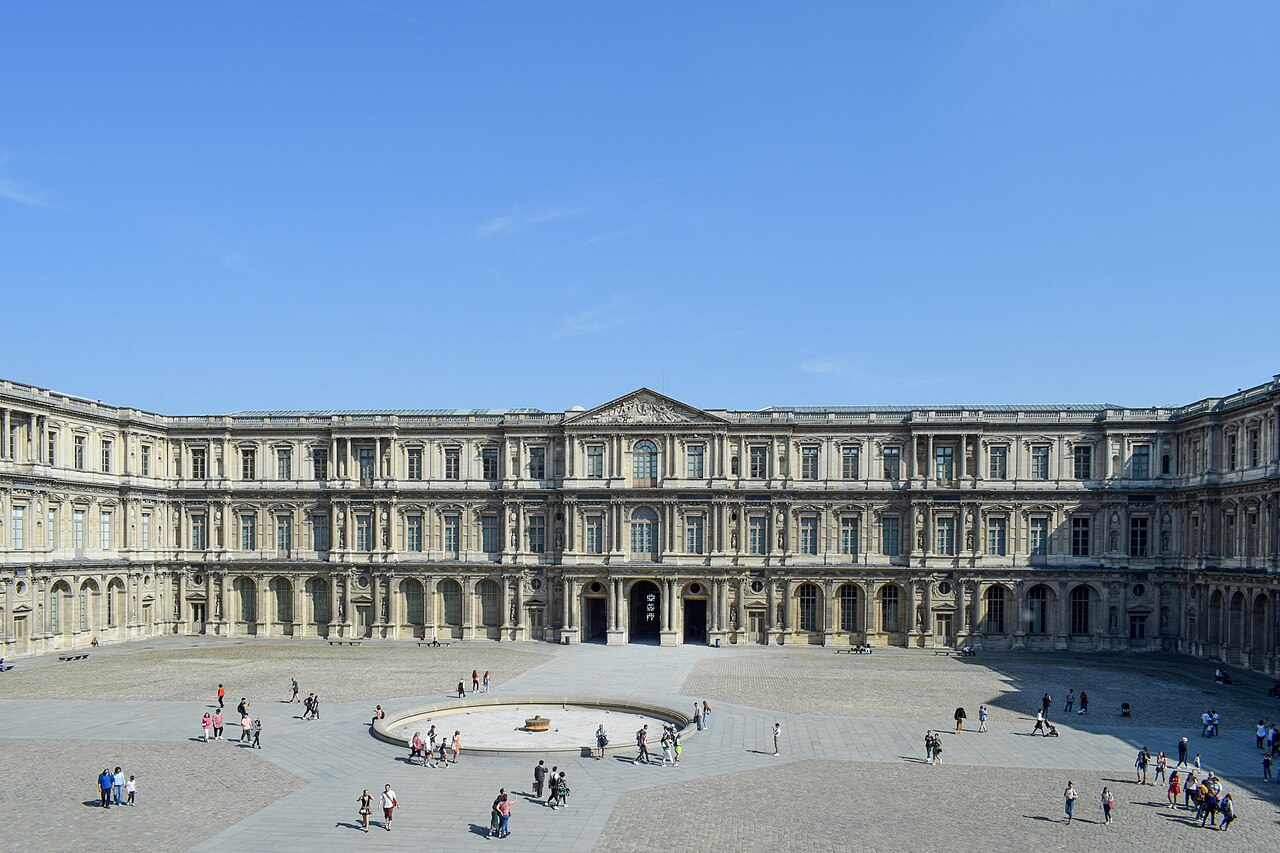
This morning, student protesters blocked the Louvre. The museum couldn't open to the public.
A leaflet left outside the museum said organisers were proud to be blocking the world's largest museum.
And here's the part that matters most.
The rest of this story is for members.
The exterior of the Louvre museum in Paris. File photo. Arunkumar Vijayan · CC BY-SA 4.0
Laurent Nunez said it himself. Police lost control of the protests in some major cities. He then offered his resignation to President Emmanuel Macron. He pointed to a lack of anticipation in the planning.
Macron said no. He told Nunez to stay, to protect the chain of command in the police and security services.
So think about that. The minister in charge of security says his own officers lost control of the streets. And the president says that minister stays anyway.
Macron has asked Nunez to be fully transparent about the failures in planning and intelligence that led to the violence. And to build new operational methods for the police.
In a televised address after the riots, Macron said: "Nothing justifies it, nothing explains it, nothing excuses it." He spoke of national anger. And shame.
Sébastien Lecornu, France's Prime Minister, blames the unrest on ultra-left groups and criminals. About 350 more people were arrested in Paris since the weekend. Nunez again pointed to ultra-left groups as responsible.
Now the businesses. Counting what they lost.
Alexandre Bompard runs Carrefour. He says 50 of the retailer's shops were damaged. Twenty of them looted. Losses in the tens of millions of euros.
Roland Lescure, France's Economy Minister, promised support for business owners. He said those who break things will pay, repair the damage and be held accountable.
And markets reacted this morning.
France's CAC 40 fell by around 1 to 1.1 per cent. The worst of any major European index. French 10-year government bond yields rose by about 7 basis points. The gap between French and German borrowing costs widened toward levels last seen during the euro-area debt crisis, more than a decade ago.
Sharon Bell, a strategist at Goldman Sachs, says the risk perception of French assets has been hit. French luxury stocks are also being hurt separately, by weaker spending from Chinese consumers.
Deutsche Bank says the unrest will not make it easy for international investors to feel entirely comfortable buying French government bonds.
So what don't we know yet?
Whether the Louvre has reopened. Whether more protests are planned this week. What the final nationwide damage bill looks like. Whether a no-confidence motion is being prepared against Lecornu's government.
Macron is due to leave office in 2027, after a decade in power. A presidential election is due next year.
For now, here's where things stand. His interior minister says the police lost the streets. And Macron says that minister isn't going anywhere.
Nothing here was paid for by an advertiser. Members are the entire business model. Bronze is where it starts, and it opens the last seven days in full.